
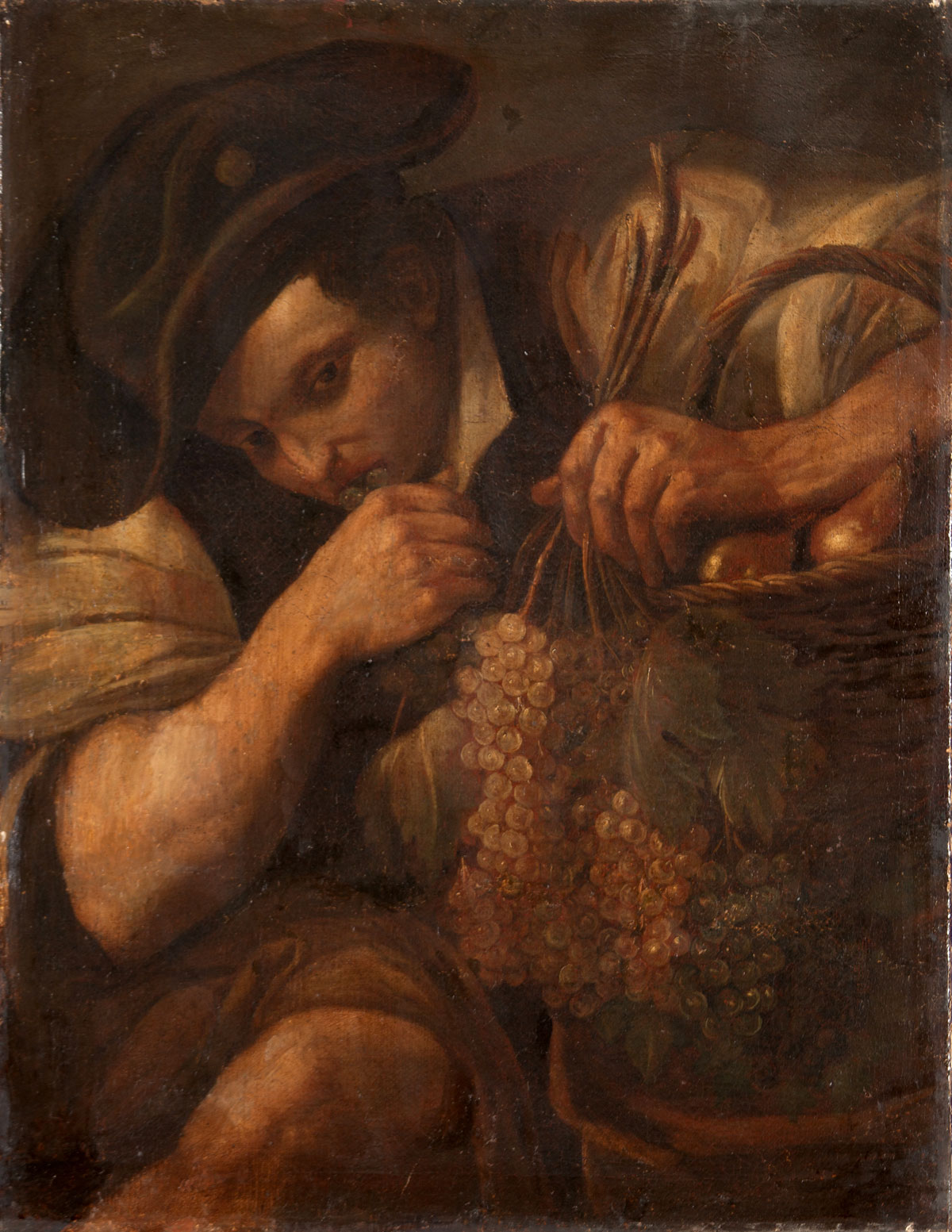
“Allegory of Autumn”, attributed to Giuseppe Romani, belongs to the tradition of Italian allegorical painting between the 17th and 18th centuries, in which the seasons are often represented through human figures, fruits and symbols connected to the natural cycle of the year. The artist, active in Lombardy, developed a language still closely linked to Baroque culture, with particular attention to the use of light and to the narrative construction of the scene.
In this work, autumn is evoked through the presence of grapes, a central element of the composition and a clear reference to the grape harvest, the ripening of fruit and the abundance of the season. The figure in the foreground, depicted in the act of bringing the bunches of grapes to the mouth, also introduces an immediate and almost everyday tone, making the allegory less solemn and closer to genre painting.
The composition is set against a dark background, from which the face, hands and fruit gradually emerge. The soft light, concentrated on the flesh tones and the grapes, guides the viewer’s gaze towards the centre of the image and emphasizes the symbolic value of the subject. Furthermore, the presence of the basket and vegetal elements strengthens the connection with nature and with the theme of the harvest.
Overall, “Allegory of Autumn” is a work of interest for its ability to combine symbolic meaning, observation of reality and Baroque sensitivity, offering a simple yet effective interpretation of the autumn season.
Description: Oil on canvas, H 77×60 cm.
Hammer Price: € 6.150,00
Auction 3 – October 24th 2014 – ANTIQUES, OLD MASTER PAINTINGS AND 19TH- AND 20TH-CENTURY PAINTINGS
Explore all the top lots from our Old Masters auctions!
Do you own a work by Giuseppe Romani? Request a free valuation now!
Contact us: